


A B.Sc. Nursing degree opens several routes, but the first job, required registration and long-term eligibility differ sharply between bedside care, public health, education, research and administration. By comparing duties, work settings, entry barriers and promotion routes, you can select a realistic first step and identify the experience or qualification needed for your preferred role.
Key takeaways
- Start with staff nurse, registered nurse or clinical nurse roles in hospitals.
- Explore public health, school, occupational health and community nursing positions.
- Build experience before moving into teaching, research, quality or healthcare administration.
- Check registration, internship, documents and employer requirements before applying.
Which nursing jobs can you enter directly after graduation?
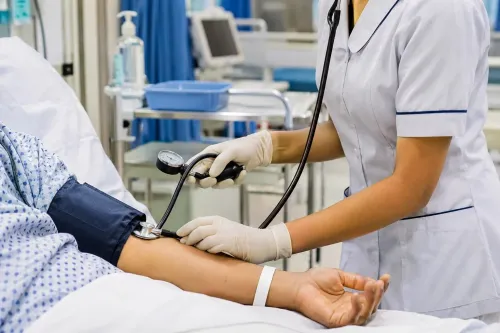
After a general B.Sc. Nursing degree, the most accessible first job is hospital employment as a staff nurse, registered nurse or clinical nurse. You assess patients, administer medicines, monitor vital signs, maintain records, assist with procedures, explain care plans and report deterioration to the medical team.
In India, obtain Registered Nurse and Registered Midwife (RN/RM) registration from the relevant State Nursing Registration Council before practising clinically.
| Role | What you do | What to expect at entry |
|---|---|---|
| Staff nurse in a medical-surgical ward | Manage patients before and after treatment, give medicines, dress wounds, document observations and coordinate discharge care | The broadest starting route; medical-surgical ward nursing jobs build core bedside experience |
| Emergency nurse | Triage patients, record rapid assessments, start prescribed interventions and prepare patients for urgent treatment | Fast decisions, rotating shifts and employer orientation |
| Operating-theatre nurse | Prepare instruments, maintain asepsis, check counts and support the surgical team | Procedure-specific training and strict infection-control practice |
| Intensive-care nurse | Monitor unstable patients, manage equipment and identify changes quickly | Unit orientation, supervised practice and strong assessment skills |
| Paediatric or obstetric nurse | Provide age-specific or maternity care, educate families and watch for complications | Department induction and supervised clinical work |
A B.Sc. Nursing degree does not automatically make you an ICU, oncology, dialysis or operating-room specialist. Employers may require unit training, experience or a certificate before independent assignment. Do not use an advanced-practice title without the postgraduate education and defined experience that the role requires.
Which community, public-service and employer-based roles are available?
Compared with ordinary hospital employment, these roles shift your work from continuous ward care to prevention, outreach, workplace safety, public programmes or service-specific duties.
| Setting | Typical work | What differs from ordinary hospital employment |
|---|---|---|
| Government hospital | Assess patients, administer medicines, document care and coordinate wards | Recruitment may require an examination, merit list, medical fitness, document verification and state registration; appointment is not automatic. |
| Primary health centre or community health centre | Maternal and child health, immunisation, health education, referrals and national health programmes | A community health officer or public-health nurse serves a defined population and may travel for outreach. |
| School | A school nurse handles first aid, health screening, medication records and student education | You manage health needs in an education setting rather than a ward, often with fewer emergency resources. |
| Factory | An occupational-health nurse provides first aid, injury reporting, health surveillance and safety training | The focus is prevention, workplace hazards and return-to-work support. |
| NGO | Run camps, tuberculosis or maternal-health projects, surveys and community education | Funding cycles, field travel and project targets can shape the work. |
| Uniformed service | A military nurse or other uniformed nurse provides clinical care within a structured service system | Selection includes the relevant notification’s age, nationality, medical and service conditions. |
Check each vacancy before applying. Community Health Officer titles may require a community-health certificate, specified training or local registration, while uniformed services use separate recruitment. Government and NGO roles also bring public accountability, travel or paperwork that a hospital ward may not.
How can you move into teaching, research, quality or healthcare administration?
A general B.Sc. Nursing degree can lead away from daily bedside care, but the entry point differs by employer. Start with a role that builds evidence in teaching, audits, data collection, documentation or service coordination.
| Path | Typical work | What employers may require |
|---|---|---|
| Nurse educator or clinical instructor | Teach skills, supervise students and assess clinical performance | B.Sc. Nursing may support junior teaching roles; permanent lecturer posts often require M.Sc. Nursing plus teaching or clinical experience |
| Research assistant | Recruit participants, collect research data, maintain records and follow study protocols | Research-methods training, data skills and Good Clinical Practice certification strengthen applications; prior research experience helps |
| Quality or infection-control coordinator | Audit records, track incidents, monitor infection-prevention practices and lead corrective actions | Hospital experience is commonly preferred; infection-control or quality certificates can improve eligibility |
| Case manager or utilisation reviewer | Coordinate treatment plans, discharge, referrals, claims and documentation | Clinical experience and knowledge of medical records, insurance processes or utilisation review are useful |
| Healthcare administration | Manage rosters, supplies, patient flow, nursing services or operations | Experience in ward coordination helps; M.Sc. Nursing, hospital administration or health-management study supports progression |
A certificate is not a substitute for a qualification that an advertised post specifically demands. M.Sc. Nursing is the conventional route into advanced teaching, nursing administration and specialist education; check registration, marks, entrance tests and experience rules for each university.
Do not claim an advanced-practice title after B.Sc. Nursing alone. Critical-care nurse-practitioner pathways require postgraduate education and defined training or experience. Research organisations, public-health projects, informatics teams and medical-documentation employers may accept graduates who demonstrate writing, spreadsheet, audit or data-collection skills.
How should you compare nursing careers before choosing one?
Rate each option against seven demands: patient contact, shift work, emergency exposure, travel, physical workload, emotional pressure and administrative responsibility. This career comparison for nurses is more useful than choosing by job title alone; a “better” role is one whose daily demands you can sustain.
| Option | Best fit | Main trade-off |
|---|---|---|
| Staff nurse or emergency nurse | You want constant patient contact, shift work and rapid decisions | High physical and emotional pressure, including nights and emergencies |
| Community health officer or public-health nurse | You prefer outreach, health education and travel between communities | Less bedside care, but substantial field travel and independent documentation |
| School or occupational-health nurse | You want regular hours, moderate patient contact and prevention work | Fewer emergencies, with responsibility for health records, referrals and workplace safety |
| Infection-control nurse | You prefer surveillance, audits, staff training and limited bedside care | Administrative accountability is high, and outbreaks create sudden pressure |
| Quality coordinator or case manager | You value documentation, indicators, audits and coordination over procedures | Patient contact is limited, but accuracy and deadline pressure are constant |
| Healthcare administration, research or teaching | You prefer operations, data, education or project work | Usually less physical work; employers may expect experience, data skills or postgraduate study |
Test your preference during clinical postings: record which duties leave you energised and which cause repeated stress. An M.Sc. Nursing can support specialist, education or administration goals, while an advanced-practice title requires the specified further training rather than a B.Sc. Nursing degree alone.
What must you complete before applying, and how can you strengthen your profile?
A B.Sc. Nursing degree is not a licence to practise by itself. Complete registration, preserve evidence of training, and match each application to its exact eligibility notice.
1. Apply for RN/RM registration with your State Nursing Registration Council. Check the Indian Nursing Council and state council for the current form, degree and marksheets, identity proof, address proof, internship completion record, medical certificate and photographs. Registration is incomplete until you receive the council’s registration number or certificate.
2. Build a document file before applying. Keep attested or digitally verifiable copies of your degree, registration certificate, internship record, experience letters, caste or category certificate where relevant, passport, and name-change proof. Amar Professional College of Nursing 08048059238 can help its graduates identify missing academic or internship records before verification.
3. Treat government recruitment as a separate process. Read the notice for the written examination, age limit, merit rules, interview, medical fitness test, document verification date and state-registration requirement; a degree does not create automatic appointment.
4. Use nursing internships and certifications to show job-ready skills. Basic Life Support, Advanced Cardiac Life Support, infection prevention, wound care, intravenous therapy, computer documentation and a recognised emergency-care course can strengthen applications when employers request them. Add supervised clinical experience before targeting intensive care, operating rooms or speciality hospitals.
5. For overseas work, verify the destination regulator’s licence pathway, credential assessment, English test such as IELTS or OET, transcript format, registration verification, visa and employer requirements. For teaching, advanced practice or administration, compare admission rules for M.Sc. Nursing, including marks, experience, entrance tests and specialty availability.
Related products
 | ₹60000 • The candidate should have passed 12 years of schooling from recognised school. View product → |
 | ₹60000 • The minimum age requirement shall be 17 years on or before 31st dec of the year of admission. View product → |
Frequently asked questions
Which nursing jobs can you enter directly after graduation?
Graduates can apply for staff nurse, registered nurse and clinical nurse roles in hospitals, clinics and specialty units. Duties include patient assessment, medicines, vital-sign monitoring, records, procedures and escalation of deterioration.
Which community, public-service and employer-based roles are available?
Career options include community health nursing, public health programmes, school nursing, occupational health, home healthcare and nursing roles with government or private employers. Requirements vary by employer and setting.
How can you move into teaching, research, quality or healthcare administration?
Gain clinical experience, strengthen documentation and communication skills, and pursue postgraduate study or role-specific training. Teaching, research, quality and administration positions often require additional qualifications or experience.
How should you compare nursing careers before choosing one?
Compare patient group, shift pattern, workload, location, salary structure, supervision, promotion routes, training access and registration requirements. Match these factors with your strengths and preferred working environment.
What must you complete before applying, and how can you strengthen your profile?
Complete the required clinical training, obtain nursing registration where applicable, organise certificates and experience records, and tailor your CV. Add relevant workshops, clinical competencies, first-aid training and placement achievements.