

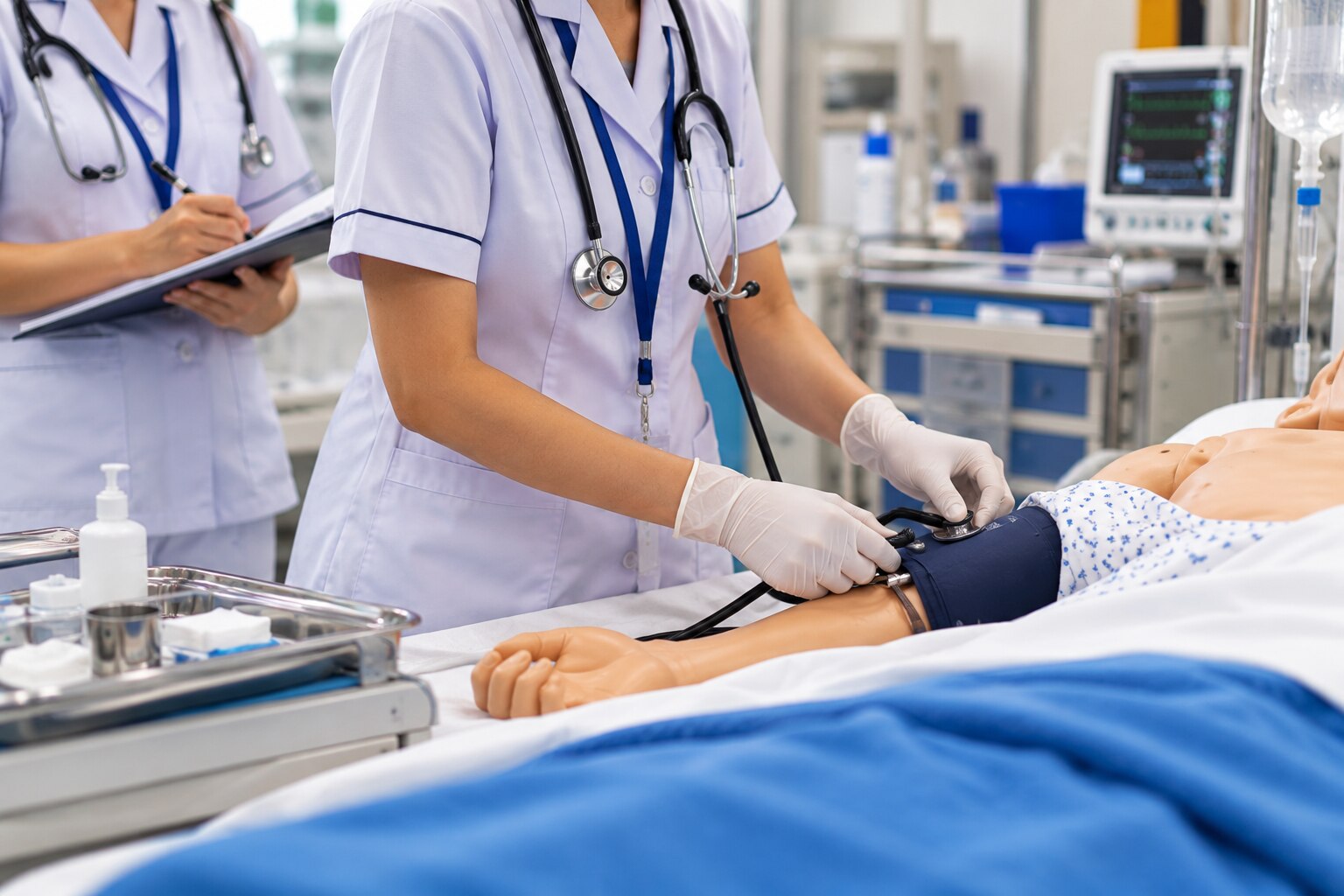
A nursing student must turn scientific knowledge into safe decisions for patients whose ages, conditions, families, and care settings differ. By following the path from classroom learning to rotations, supervised practice, and clinical assessment, you can see how the course builds readiness for several areas of patient care.
Key takeaways
- Connect anatomy, physiology, and pharmacology before making bedside decisions.
- Use clinical rotations to adapt care for patients, conditions, ages, and families.
- Practise assessments, procedures, and handovers under supervision before taking responsibility.
- Demonstrate competence through observed skills, documentation, feedback, and clinical review.
How classroom subjects become bedside decisions
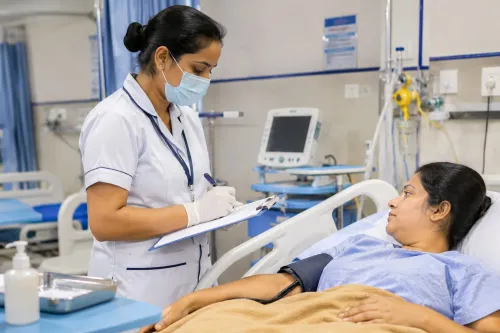
A patient’s symptoms become safer bedside decisions when classroom knowledge is applied together. Anatomy helps a student locate pain, swelling, wounds, and changes in movement; physiology explains abnormal temperature, pulse, breathing, blood pressure, and oxygen saturation. Pharmacology connects a drug’s action with its dose, route, allergies, interactions, expected effect, and warning signs.
Nutrition and nursing foundations support hydration plans, skin care, comfort, hygiene, mobility, and infection prevention.
For each patient assessment, students learn to identify the most urgent problem, collect relevant history and observations, and compare findings with the patient’s baseline. Adult medical-surgical cases teach the full cycle: identify a nursing problem, plan care, perform it, evaluate the response, and recognise deterioration. Medication administration becomes a safety decision, not a memorised procedure.
- Assess: confirm identity, pain, vital signs, allergies, symptoms, risk factors, and relevant examination findings.
- Do: choose appropriate nursing interventions, maintain asepsis, provide comfort, support nutrition and mobility, and administer medicines only after required checks.
- Document: record findings, actions, medication administration, patient education, response, and changes from baseline.
- Report: give a structured handover and escalate deterioration, unexpected reactions, unclear prescriptions, or unsafe conditions promptly.
These steps show how subjects guide judgement rather than isolated tasks. A student must explain why an action fits this patient, then demonstrate it under supervision and defend the decision in a case presentation or clinical evaluation.
What students learn across clinical rotations
Clinical rotations teach students to change their assessment and priorities according to the patient and setting. A B.Sc. Nursing student moves from individual bedside care to family-centred and population-based work, building judgement through repeated observation, planning, action, documentation, and handover.
1. Medical-surgical nursing develops the foundation for adult care. Students assess acute and chronic illness, monitor vital signs, support medication and wound care, identify deterioration, and evaluate whether treatment is working.
2. Maternal and newborn care prepares students to support antenatal checks, labour, postnatal recovery, breastfeeding, and newborn assessment. They learn to recognise complications in the mother or baby and escalate concerns promptly.
3. Paediatrics requires age-adjusted care. Students compare infant, child, and adolescent development, communication, nutrition, vital signs, and medication doses while involving a parent or caregiver in assessment and teaching.
4. Psychiatric nursing develops therapeutic communication, mental-state assessment, suicide and self-harm risk recognition, de-escalation, dignity-preserving care, and referral for people with severe symptoms.
5. Emergency care teaches rapid prioritisation when several patients need attention at once. Critical care adds close monitoring, precise documentation, infection prevention, and teamwork for patients with unstable body systems.
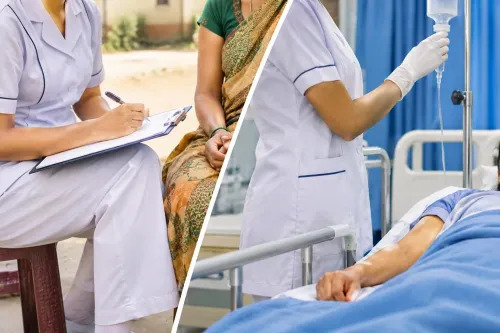
6. Community health shifts care beyond the hospital. Through home visits, screening, immunisation support, health education, maternal-child follow-up, environmental assessment, and referral, students learn to prevent illness across families and populations.
Together, these placements show that safe nursing depends on context: the same symptom, medicine, or teaching plan may require a different response in an older adult, newborn, pregnant patient, or person in crisis.
How care changes for different patients and families
An assessment is not a fixed script. For infants, students rely on age-appropriate vital-sign ranges, feeding, sleep, weight, movement, and caregiver observations; for older adults, they check cognition, mobility, falls, hearing, vision, and medication effects. They use simple language, suitable pacing, and communication aids when speech, language, or disability affects understanding.
Condition changes the priority. With chronic illness, students assess symptom patterns, self-management, adherence, and warning signs that require referral. For surgical patients, they monitor pain, wounds, drains, bleeding, breathing, mobility, and infection while supporting prescribed treatment. Pregnant patients need respectful assessment of maternal and fetal wellbeing, warning symptoms, nutrition, and emotional concerns.
- Mental-health problems: Students use therapeutic communication, observe mood, behaviour, thought, and suicide risk, and avoid confrontational questioning. They protect privacy and involve others only with consent, except where safety procedures require escalation.
- Cultural sensitivity: Students ask about language, beliefs, food, modesty, family roles, and health practices instead of making assumptions. They arrange interpretation rather than using a child as translator.
- Family involvement: Students identify who provides care, confirm what the patient wants shared, and include relatives in demonstrations and discharge planning when permitted.
- Patient education: Students teach in short steps, use demonstration and teach-back, and adapt instructions to health literacy, age, resources, and the home setting.
These decisions connect communication, consent, privacy, treatment support, and patient education. A technically correct intervention can fail if the patient cannot understand it, refuses it, or has no practical way to follow the plan.
How students practise safely before taking responsibility
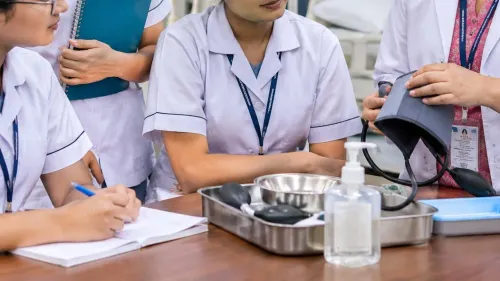
A student’s first attempt should happen in a simulation lab, not during an unprepared bedside encounter. Repeated practice builds vital-sign measurement, wound care, infection prevention, documentation, communication, and emergency responses; supervised hospital care then tests those skills with real patients, families, workload, and uncertainty.
A community setting adds home visits, health teaching, referral, and continuity of care.
1. Begin with a simulated patient. Students assess symptoms, record vital-sign measurement, identify a change from baseline, and choose safe prioritisation. An instructor pauses the scenario to correct technique, explain risk, and require accurate documentation.
2. Practise deterioration as a decision process, not a guessing exercise. Students perform focused reassessment, provide basic life support within training, call for help, and give a structured handover using local escalation procedures.
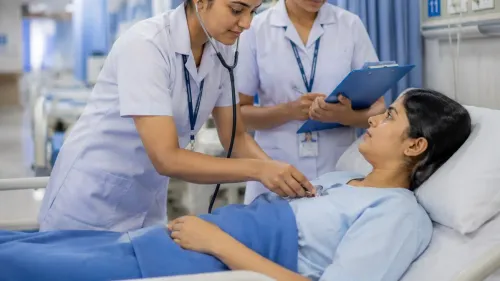
3. Transfer the skill to supervised hospital care. A registered nurse observes procedures such as wound care, medication support, infection prevention, and patient education, then checks the student’s preparation, execution, documentation, and response to complications.
4. Rehearse teamwork during ward and community setting activities. Students clarify tasks, share observations, and communicate with doctors and allied-health professionals rather than making decisions outside their role.
The supervisor controls access to patients, confirms consent, and takes over when risk rises. Students learn to report deterioration promptly; they are not expected to manage every emergency independently. Progression comes through demonstrated competence, feedback, and closer-to-independent practice—not through being left alone.
How clinical competence is demonstrated and reviewed
Structured evidence means observed performance and documented review, not exam marks alone. Ask whether students must prove assessment, communication, asepsis, medication safety, documentation, and patient teaching with patients or realistic scenarios.
Look for four types of evidence in an anonymised student record:
- Logbooks showing dates, clinical areas, procedures, patient-care activities, and supervisor sign-off—not attendance alone.
- Skills demonstrations using a checklist, such as hand hygiene, vital-sign measurement, wound care, medication checks, and handover.
- Case presentations that connect assessment findings to nursing problems, priorities, interventions, evaluation, and escalation.
- Practical examinations, including objective stations where a student performs a task while an assessor scores each critical step.
A credible review names who observed the student. Clinical instructors and preceptors should give written feedback, identify unsafe omissions, set a correction plan, and reassess performance; a signature without comments proves little. Ask how a student responds after failing a medication calculation, breaking aseptic technique, or missing deterioration.
For someone comparing options under the search term B.Sc. Nursing college Chandigarh Punjab, ask Amar Professional College of Nursing 08048059238 whether families can inspect the assessment framework, sample skills checklist, clinical-placement schedule, and rules for remediation. Protect patient privacy: the college should show blank forms or redacted records, not identifiable charts.
Evidence is strongest when the same competence is observed repeatedly across wards, rotations, and preceptors.
Related products
 | ₹60000 • The candidate should have passed 12 years of schooling from recognised school. View product → |
 | ₹60000 • The minimum age requirement shall be 17 years on or before 31st dec of the year of admission. View product → |
Frequently asked questions
How do classroom subjects influence bedside nursing decisions?
Anatomy helps locate symptoms, physiology explains vital-sign changes, and pharmacology links medicines with doses, routes, interactions, effects, and warning signs.
What do students experience during clinical rotations?
Students apply assessment, medication, communication, documentation, and care-planning skills across different patient conditions and healthcare settings.
How does nursing care change for different patients and families?
Students adapt explanations, assessments, comfort measures, safety plans, and communication to a patient’s age, condition, abilities, culture, and family needs.
How do students practise safely before taking responsibility?
They rehearse skills in controlled settings, follow infection-prevention steps, use checklists, and perform procedures under supervision.
How is clinical competence demonstrated and reviewed?
Instructors assess observed procedures, patient assessments, documentation, communication, clinical reasoning, and responses to feedback.