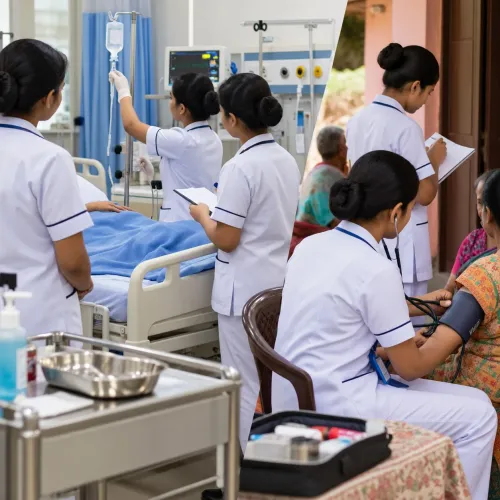



Knowing anatomy or memorising medication names is not enough to make a safe bedside decision. By following the path from theory lesson to skills laboratory, supervised placement and competency assessment, you can see how nursing students build reliable clinical judgment and compare the practical demands of different programmes.
Key takeaways
- Use anatomy and pharmacology to explain each assessment and intervention.
- Practise procedures in simulation before performing them with patients.
- Compare placement hours, supervision and skills assessments—not classroom subjects alone.
- Expect competence checks through observation, documentation and safe clinical decisions.
How classroom subjects guide bedside decisions
Classroom subjects turn academic knowledge into clinical judgment by explaining why a patient needs a particular assessment, intervention, or precaution. You learn to connect a patient’s signs with underlying body processes, treatment effects, infection risks, and personal needs.
The connection becomes visible in decisions such as:
- Anatomy: position a patient to protect an injured joint, support breathing, or avoid pressure on vulnerable tissue.
- Physiology: recognise when changes in pulse, blood pressure, oxygen saturation, or urine output signal deterioration.
- Pharmacology: check an indication, dose, route, contraindication, and possible adverse effect before giving medication.
- Microbiology: use hand hygiene, personal protective equipment, sterile technique, and waste disposal to prevent transmission during wound care.
- Nutrition: identify dietary risks that affect healing, hydration, or blood-glucose control.
- Psychology and nursing theory: adapt communication, consent, education, and support to the patient’s behaviour and circumstances.
Case studies make this reasoning active. You identify important cues, decide which problem needs attention first, choose a safe response, and reassess the result. Debriefing exposes weak assumptions: a student explains the decision, compares it with clinical evidence, and changes the plan for a similar case.
A written test can confirm knowledge, but safe bedside judgment also requires applying that knowledge while communicating clearly and responding when the patient’s condition changes.
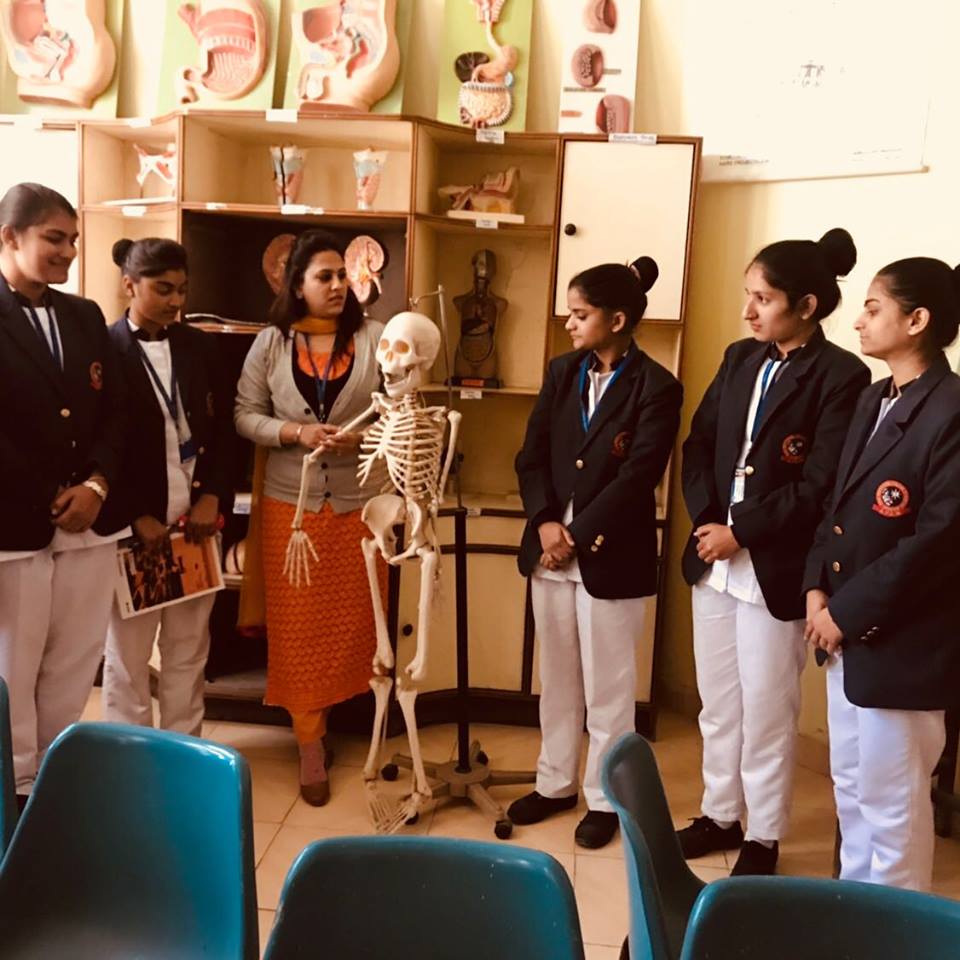
How skills laboratories and simulation prepare students for patients
A student may know how infection spreads yet still miss a hand-hygiene step while working under pressure. Skills laboratory sessions turn that knowledge into repeatable behaviour before a patient is involved.
- Students prepare the area, check equipment, identify hazards, and perform hand hygiene before putting on the correct personal protective equipment.
- They practise aseptic technique, respiratory precautions, safe sharps disposal, injection safety, and environmental cleaning so contamination becomes visible and correctable.
- They measure and record vital signs, assess pain, position and transfer patients, provide basic hygiene, and perform wound-dressing procedures using training equipment or task trainers.
- They rehearse medication administration by checking the patient, prescription, dose, route, allergies, expiry date, and expected effects, then documenting and reporting concerns.
- They use simulation with mannequins, standardized patients, or case scenarios to communicate clearly, recognise deterioration, call for help, and respond to an adverse reaction.
Instructors observe each sequence through laboratory check-offs and give immediate feedback. A student repeats a failed step until the performance is safe, rather than relying on a written test score.
Simulation cannot replace consent-based patient contact, but it fills gaps that a placement may not provide. It lets students practise rare emergencies, privacy-conscious communication, and coordinated care without exposing a real patient to an avoidable mistake.
How clinical placements build supervised independence
A clinical placement moves students from rehearsing tasks to caring for real people under supervision. They begin by observing unit routines, then assist with care and take responsibility for selected patients as their instructor or preceptor confirms safe performance.
- Observe handovers, assessments and daily workflow.
- Perform agreed tasks with direct supervision.
- Coordinate care, document findings and report changes.
- Manage a patient assignment with the supervisor available for review.
On a medical-surgical ward, a student may prioritise competing needs, locate equipment, answer interruptions and update an electronic record. A procedure completed smoothly in a quiet laboratory becomes harder when a patient is in pain, a medication is delayed or vital signs change.
Supervision also makes infection prevention visible in practice. Students must repeat hand hygiene, personal protective equipment selection, aseptic technique and injection-safety steps until they remain reliable under time pressure. The same progression applies in a maternity unit and paediatric ward, where consent, privacy, communication and age-specific risks shape what the student may do.
A student’s permitted practice depends on the jurisdiction, programme and training level, so placement does not mean unrestricted access to every procedure. Patient safety, consent, acuity and willingness limit learning opportunities; simulation and skills-laboratory practice fill gaps when a student does not encounter a particular condition.
Feedback after each shift links technical performance with clinical judgment and sets the next step toward independence.
How nursing competence is tested beyond written exams
A written pass proves recall, not safe bedside practice. Educators determine competence by comparing knowledge with observed performance across laboratory check-offs, simulation, clinical placements and patient handovers.
- A return demonstration shows whether you can perform a procedure in the correct sequence, use infection-control measures, identify risks and explain what you are doing.
- An objective structured clinical examination tests a defined scenario, such as assessing breathing, positioning a patient or responding to a sudden deterioration, against a scoring checklist.
- A logbook records completed skills, supervised procedures, patient-care experiences and instructor feedback, revealing whether performance is becoming consistent.
- A case study tests clinical judgment: you interpret findings, identify priorities, plan care and explain when the patient’s condition requires escalation.
- A faculty or preceptor evaluation examines reliability in real care, including assessment, documentation, teamwork and professional conduct.
Medication assessment goes beyond dose calculation. You must verify the patient and medicine, check allergies, assess appropriateness, explain the treatment, document it, monitor its effect and act on an adverse reaction.
Communication is assessed through handoffs using SBAR and closed-loop communication. Educators listen for accurate information, confirmation of instructions and clear escalation when vital signs, symptoms or patient behaviour change. A safe student does not simply complete a task; they notice a new risk, reassess the patient and seek help within their permitted scope.
What the practical workload means when comparing nursing courses
Do not compare nursing programmes by classroom timetable alone. There is no single worldwide total for clinical hours, so ask each programme for its required hours, placement settings, travel expectations, and procedure for making up missed time. Attendance failures can delay progression even when your examination marks are strong.
| Placement arrangement | Verify before enrolling | What it means for your week |
|---|---|---|
| Fixed weekday placement | Start and finish times, minimum attendance, and travel time | Easier to plan work or childcare, but a distant hospital can still create a long daily commute. |
| Rotating placement | Evening, night, weekend, and public-holiday requirements | Shift work tests your sleep, transport, and family arrangements; confirm how rotations are assigned. |
| Block placement | Number of consecutive days and whether breaks occur between blocks | Fewer journeys can mean longer, more intense periods away from other commitments. |
Ask who supervises you, how many students share an instructor, and whether placements include medical-surgical wards, maternity, paediatrics, mental health, community care, or home-care visits. A programme promising “clinical exposure” without naming settings gives you too little to compare.
At Amar Professional College of Nursing 08048059238, request a sample weekly timetable and a written list of required uniforms and equipment before deciding. Check whether you must buy clinical shoes, a watch with a second hand, a stethoscope, scissors, identification tags, or protective clothing, and budget for replacement items and laundry.
Also ask whether attendance is recorded per shift, clinical day, or hour.
Related products
 | ₹60000 • The candidate should have passed 12 years of schooling from recognised school. View product → |
 | BFUHS home-based care helper (often called a caregiver or home care assistant) is someone who provides support to people in their own homes instead of a... View product → |
Frequently asked questions
How do classroom subjects guide bedside nursing decisions?
Anatomy, physiology, pharmacology, microbiology and communication help you interpret signs, choose safe interventions and recognise risks.
How do skills laboratories prepare nursing students for patients?
You rehearse procedures such as vital-sign measurement, medication administration and infection-control steps using equipment and simulated scenarios.
What do clinical placements teach nursing students?
Under supervision, you apply theory to real patients, communicate with healthcare teams, document care and take on more responsibility as your competence grows.
How is nursing competence tested beyond written exams?
Instructors assess observed procedures, clinical reasoning, patient communication, documentation and safe responses to changing conditions.
What should you compare when reviewing nursing courses?
Check placement structure, supervision, simulation access, assessment methods, attendance demands and the time required for preparation and travel.
Related product
 | ₹60000 • The minimum age requirement shall be 17 years on or before 31st dec of the year of admission. View product → |