


Choosing a healthcare course requires more than comparing course names: you need to know the credential, legal scope of practice, clinical preparation, admission conditions, and work settings each route leads to. By the end, you will be able to match your education, registration status, responsibilities, and available study time to a nursing or home-care pathway and identify which admission details require 2026 verification.
Key takeaways
- GNM is required for B.Sc. Nursing (Post Basic), not entry-level B.Sc. Nursing.
- Match your course to your education level and intended clinical responsibility.
- Verify recognition, eligibility, clinical training, fees and admission dates before applying.
- Compare colleges by faculty, hospital exposure, student support and documented outcomes.
Which healthcare course matches your starting point and career goal?
Your starting point and intended responsibility decide the right route. GNM is required before B.Sc. Nursing (Post Basic), but it is not required for entry-level B.Sc. Nursing.
| Route | Entry point | Qualification and outcome |
|---|---|---|
| B.Sc. Nursing | Eligible school-leavers meeting the current admission rules | An initial nursing degree that prepares you for registered-nurse registration, subject to regulator requirements |
| GNM | Eligible applicants who meet the approved diploma route’s rules | A nursing diploma and a route toward registered-nurse registration where the nursing council permits it |
| B.Sc. Nursing (Post Basic) | Candidates who already hold GNM and current state nursing council registration | A degree-completion qualification that builds on existing nurse preparation |
| Home Based Care Helper | Applicants seeking a short vocational care course | A home-support qualification, not a registered-nurse credential |
B.Sc. Nursing and GNM prepare registered nurses for nursing assessment, clinical judgement, care planning, documentation, medication-related duties within authorised scope, and escalation when a patient deteriorates. Registration, examination, and legal authority still depend on the relevant jurisdiction; completing a course alone does not create a licence.
Home Based Care Helper training focuses on daily living support, comfort, mobility assistance, observation, and reporting concerns to a supervising professional. It does not prepare you for independent nursing assessment, diagnosis, invasive procedures, or unauthorised medication decisions.
Before enrolling, identify the exact credential, regulator, examination, and legal authority attached to the course. A healthcare-related label alone cannot tell you whether the programme leads to registered-nurse practice or supervised home support.
How long do the courses take, and what clinical preparation is included?
1. B.Sc. Nursing is a four-year degree with theory, skills laboratories, supervised clinical hours and an internship or final placement under the approved curriculum. B.Sc. Nursing (Post Basic) is a two-year degree-completion route for GNM-qualified, registered nurses; its laboratory and clinical requirements depend on the approved regular or distance format.
GNM is a three-year diploma route with classroom teaching, laboratory practice, supervised clinical hours and the internship specified by the regulator. Home Based Care Helper has a shorter, regulator-approved vocational duration, with basic laboratory or demonstration practice and supervised home or community placement where the programme requires it.
2. Ask for the 2026 prospectus to state the semester structure or annual pattern, total clinical hours, laboratory attendance, simulation hours, internship dates and placement sites. Theory may be online, but laboratory competency checks and supervised clinical education require attendance.
Fixed shifts also bring travel, uniforms, health records, immunisations, background checks and hospital or community-site rules.
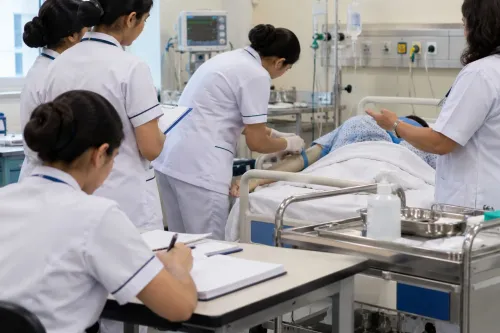
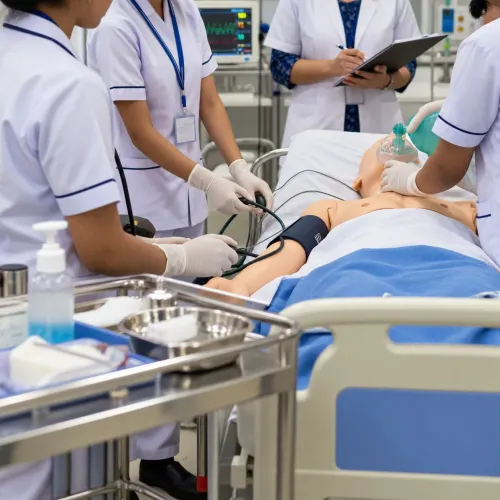
3. Practice progresses from vital signs, hand hygiene and infection prevention, patient identification, mobility and positioning, wound care, dose calculations, infusion-rate mathematics and medication administration to documentation, health education, communication, prioritisation and emergency response. Simulation uses scenarios, faculty facilitation, debriefing and assessment; it is not an online video and does not automatically replace clinical placement.
Confirm the exact 2026 schedule, approved duration and clinical hours with the institution and relevant regulator.
What jobs and legal responsibilities follow each qualification?
A qualification maps to a job only after you meet the regulator’s registration and licensing rules. The same course title can lead to different legal authority in different jurisdictions.
| Qualification | Realistic employers | Duties and legal position |
|---|---|---|
| B.Sc. Nursing | Hospitals, primary health centres, nursing homes, outpatient services, community programmes | Registered nurse pathway for assessment, care planning, documentation, medication-related duties, and escalation within the nursing scope of practice |
| GNM | Hospitals, clinics, nursing homes, public-health projects, community services | Registered nurse pathway where registration and employment rules permit; duties depend on authorised scope and employer policy |
| B.Sc. Nursing (Post Basic) | Hospitals, public-health services, education or community settings | Adds degree-level education to prior nursing preparation; it does not replace state nursing council registration or employment requirements |
| Home Based Care Helper | Private homes, home-care agencies, assisted-living and community-support programmes | Bathing, dressing, feeding, safe transfers, comfort, companionship, observation, and reporting concerns; not independent nursing practice |
The caregiver versus nurse distinction matters. A Home Based Care Helper course does not authorise independent nursing assessment, diagnosis, invasive procedures, or medication decisions reserved for licensed professionals.
In the United States, a nursing regulatory authority decides eligibility for the NCLEX-RN and initial licensure; passing the exam and completing a course do not automatically guarantee a licence. Indian applicants must verify state nursing council registration and applicable national or state rules.
- Check renewal dates, continuing-education requirements, competency checks, and inactive or lapsed-licence rules.
- A BSN does not make you an advanced practice nurse; that requires further role-specific education, certification, and authorisation where required.
- Ask which credential, examination, registration, and legal scope the course actually provides.
Which admission details must you verify before applying in 2026?
| Course | Verify before applying in 2026 |
|---|---|
| GNM | GNM marks threshold, accepted subjects, whether science is compulsory, entrance test or merit selection, interview, and tie-breaking rank |
| B.Sc. Nursing | The 2026 prospectus, required subjects for nursing admission, eligibility, selection method, and resulting credential |
| B.Sc. Nursing (Post Basic) | GNM certificate, registration requirement, 2026 prospectus, selection rules, and degree-awarding body |
| Home Based Care Helper | The 2026 prospectus, vocational credential, selection rules, and whether registration follows completion |
Ask the institution or regulator for written rules, not a verbal assurance. Confirm whether selection uses merit, an entrance test, an interview, or a combination, plus the deadline, document format, fee conditions, and tie-breaking method.
Check the awarding body, programme approval, current accreditation status where relevant, state nursing council recognition, clinical-affiliation arrangements, and the credential or registration available after completion. Approval and accreditation are separate checks: approval concerns eligibility under the regulator’s rules, while accreditation is a separate quality review that can affect transfer, further study, or employer requirements.
Use this nursing admission document checklist 2026:
- Identity and address proof, school certificates and marksheets
- Transfer or migration certificate, if required
- Photographs and medical-fitness certificate
- Category or domicile certificate, where applicable
- GNM certificate and marksheets for Post Basic applicants
- Current state nursing council registration evidence
Confirm every item against the current prospectus; last year’s rules can misstate subjects, formats, deadlines, or fees.
How should you choose a course and compare nursing colleges?
Use these four facts in a nursing course decision guide: your current education, prior nursing registration, desired responsibility, and time available for study.
| Option | Best fit | Result |
|---|---|---|
| B.Sc. Nursing | Eligible student seeking a degree-based entry route | Initial nursing degree |
| GNM | Approved diploma route fits your eligibility and timeline | Nursing diploma |
| B.Sc. Nursing (Post Basic) | GNM-qualified, state-registered nurse seeking progression | Degree-level nursing qualification |
| Home Based Care Helper | Shorter, supervised home-support work | Care qualification, not registered-nurse practice |
Choose B.Sc. Nursing or GNM based on the qualification and study time you need. Post Basic eligibility applies only after GNM and nursing-council registration. A bridge is not automatically a shortened destination programme: each school decides which theory, laboratory, and clinical credits transfer.
When you compare nursing colleges, check:
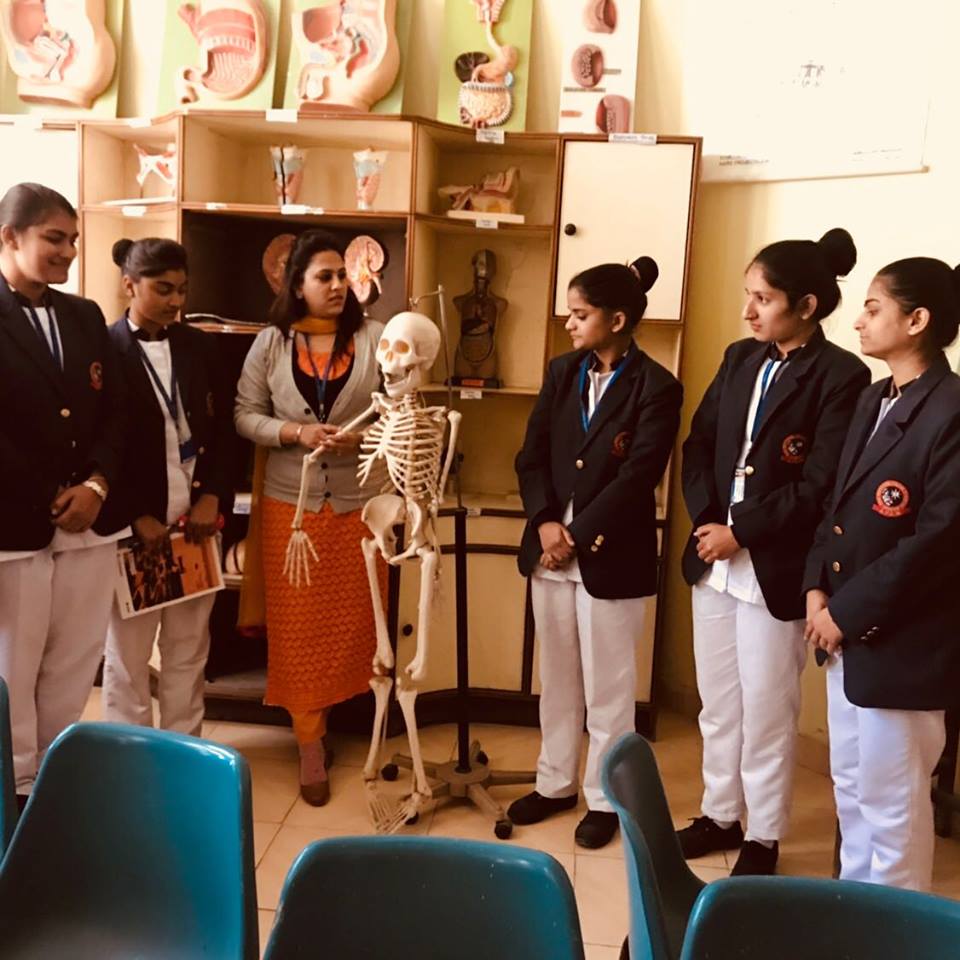
- Faculty supervision, laboratory equipment, simulation quality, and clinical-site access
- Placement shifts, transport, and total study time
- Medication-safety assessment and documentation teaching
- Pass and progression rules
- Support for council registration
Simulation must include scenarios, faculty facilitation, debriefing, and assessment; an online video cannot replace supervised clinical education. Confirm who teaches medication calculations and what happens after a failed safety assessment.
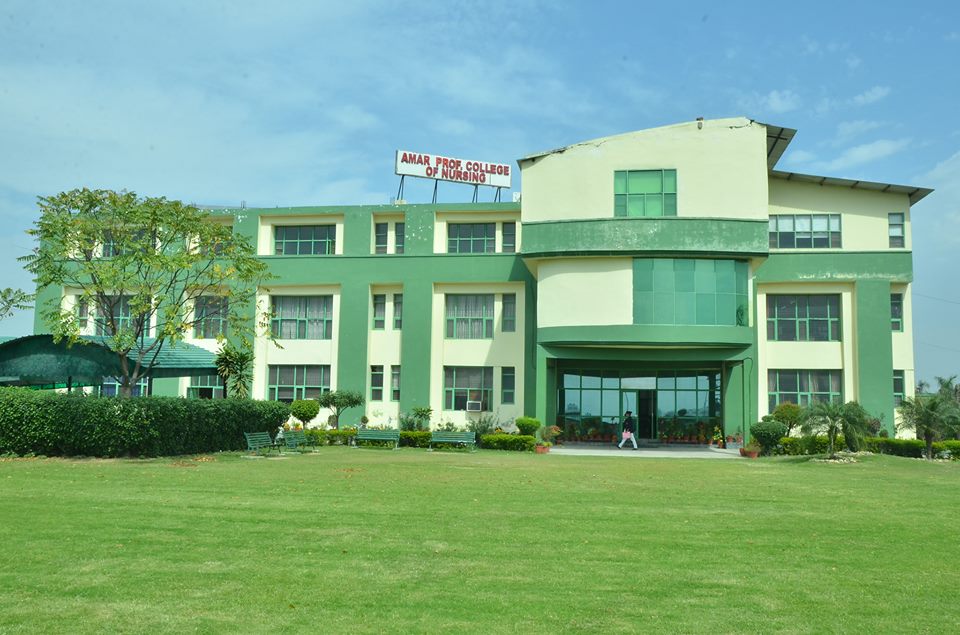
Amar Professional College of Nursing 08048059238 can provide one comparison source: request its current 2026 prospectus, exact GNM marks rule, subject list, selection method, course calendar, clinical-hour schedule, approval details, and document checklist. Compare those answers with the relevant nursing council and awarding body before enrolling.
Related products
 | ₹60000 • The candidate should have passed 12 years of schooling from recognised school. View product → |
 | ₹60000 • The minimum age requirement shall be 17 years on or before 31st dec of the year of admission. View product → |
Frequently asked questions
Which nursing course suits my education and career goal?
Choose entry-level B.Sc. Nursing if you meet its direct-entry eligibility. Choose GNM for a diploma route, or B.Sc. Nursing (Post Basic) after completing GNM and meeting the required conditions.
How long do nursing courses take?
Course duration depends on the programme and its prescribed clinical and classroom requirements. Compare the official duration, practical rotations, hospital exposure and internship structure before enrolling.
What jobs follow GNM and B.Sc. Nursing qualifications?
Your qualification affects the roles you can apply for and the responsibilities assigned by an employer. Check the applicable registration, employer eligibility and scope-of-practice requirements before accepting a post.
What should I verify before applying to a nursing college in 2026?
Confirm the admission eligibility, recognised programme status, current application dates, total fees, clinical placement arrangements, required documents and registration pathway directly with the college and relevant authorities.
Related products
 | BFUHS home-based care helper (often called a caregiver or home care assistant) is someone who provides support to people in their own homes instead of a... View product → |
 | ₹55000 Age: for entrance shall be 17 to 35 years as on 1st September of the year of Admission. View product → |