


Students usually study far more than anatomy and bedside procedures. The course combines biological sciences, nursing foundations, specialty care, public health, research, leadership and supervised clinical work, so you can compare a syllabus by both its subjects and the settings in which you will apply them.
Key takeaways
- Expect Anatomy, Physiology, Psychology and nursing foundations in first year.
- Study medical-surgical nursing, pharmacology, nutrition and specialty care in middle years.
- Final-year subjects focus on community health, research, leadership and internship readiness.
- Compare clinical hours, assessment methods, hospital exposure and internship supervision.
Which subjects are usually taught in the first year?
First-year B.Sc. Nursing builds the scientific and human foundation needed to assess patients safely. Anatomy explains body structure, while Physiology shows how organs function normally; together, they help you recognise when a pulse, breathing pattern, neurological response or other finding is abnormal.
| Subject | Practical connection |
|---|---|
| Anatomy and Physiology | Locate body structures and relate normal function to patient assessment and clinical findings. |
| Biochemistry | Connect glucose, electrolytes, proteins and other laboratory values with nutrition, disease and treatment decisions. |
| Nutrition | Plan dietary care by considering energy needs, hydration, illness, recovery and feeding difficulties. |
| Microbiology | Understand pathogens, specimen handling, hand hygiene, aseptic technique and infection prevention. |
| Psychology and Sociology | Interpret behaviour, development, family relationships, culture and health beliefs during communication and care. |
Nursing Foundation is usually the first nursing-specific subject. It develops vital-sign measurement, hygiene, mobility assistance, communication, documentation, patient safety and infection control, then uses the nursing process or clinical-judgement cycle to assess needs, plan care, act and evaluate results.
Theory is paired with laboratory work. Students may examine specimens, practise measurements, learn handwashing and other infection-control procedures, and complete introductory demonstrations such as bed-making, positioning, transfers and basic assessment. Universities may present these areas as separate papers or integrated modules, so compare the official first-year curriculum rather than relying on subject names alone.
What nursing and specialty subjects appear in the middle years?
Second- and third-year subjects turn foundation science into patient care through Pharmacology, Pathology, Genetics and major nursing specialties. Students use clinical judgement, care planning and case-based learning to connect classroom knowledge with patient findings.
Pharmacology links drug action, indications, contraindications, adverse effects, routes, dose calculations and monitoring to safe medication administration. Pathology explains how disease changes body function, while Genetics helps students recognise inherited conditions, risks and family implications.
Medical-Surgical Nursing is usually one of the largest areas. It covers assessment and care for acute, chronic, postoperative and complex adult conditions, including patients in medical-surgical wards and critical-care environments.
- Midwifery or Obstetric Nursing focuses on antenatal assessment, labour, postnatal care and newborn safety in maternity and newborn units. Its decisions depend on maternal-fetal findings, labour progress and rapid recognition of complications.
- Child Health Nursing adapts assessment, communication, medication calculations and care planning to developmental stage, with paediatric wards requiring close attention to safeguarding, weight-based dosing and family participation.
- Mental Health Nursing uses mental-state examination, therapeutic communication and risk assessment rather than relying mainly on physical signs. Psychiatric units require attention to suicide risk, aggression, consent and medication effects.
One institution may teach Pharmacology, Pathology or Genetics as independent papers; another may embed them within specialty modules. Compare the official semester-wise curriculum and clinical placements before assuming course titles have identical content.
What do final-year subjects add to the nursing degree?
Final-year study shifts from learning individual procedures to managing care, populations and professional responsibilities. Community Health Nursing connects epidemiology with health promotion, disease prevention and population-based care beyond the hospital.
Field and community work commonly includes:
- Immunisation planning and health education
- Family assessment and community diagnosis
- Environmental health and sanitation
- Home visits and referral follow-up
- Screening, surveillance and prevention programmes
Nursing Research and Statistics teaches you to frame a clinical question, review evidence, interpret basic data and judge whether findings apply to patient care. Where required, you may complete a research project, dissertation or evidence-based practice assignment.
Nursing Education develops lesson planning, patient teaching and the communication of clinical information. Nursing Administration adds leadership, delegation, staffing, quality improvement, health policy and interprofessional teamwork, preparing you to coordinate care rather than only carry out assigned tasks.
Electives let you study a focused area, while seminars and presentations test your ability to organise, explain and defend clinical knowledge. These activities also build confidence for handovers, teaching sessions and professional meetings.
A regular B.Sc. Nursing pathway develops foundational science, nursing practice and professional responsibility across the full programme. B.Sc. Nursing (Post Basic) is designed for a GNM-qualified nurse who may already bring practical experience and prior foundation learning, so it often concentrates more on baccalaureate-level theory, research, leadership, community health and professional advancement.
Check the university’s official curriculum for the exact credit structure.
How do theory subjects become clinical and internship experience?
A complete B.Sc. Nursing course connects four learning modes: classroom theory, laboratory work, simulation, and supervised clinical postings. Each mode prepares you for the next rather than functioning as a separate timetable requirement.
1. Classroom theory explains why care works. Anatomy and Physiology support assessment of normal and abnormal findings; Pharmacology supports medication checks and monitoring; Microbiology supports aseptic technique; Nutrition supports dietary planning. Mental Health Nursing develops therapeutic communication, while Community Health Nursing supports family visits and prevention work.
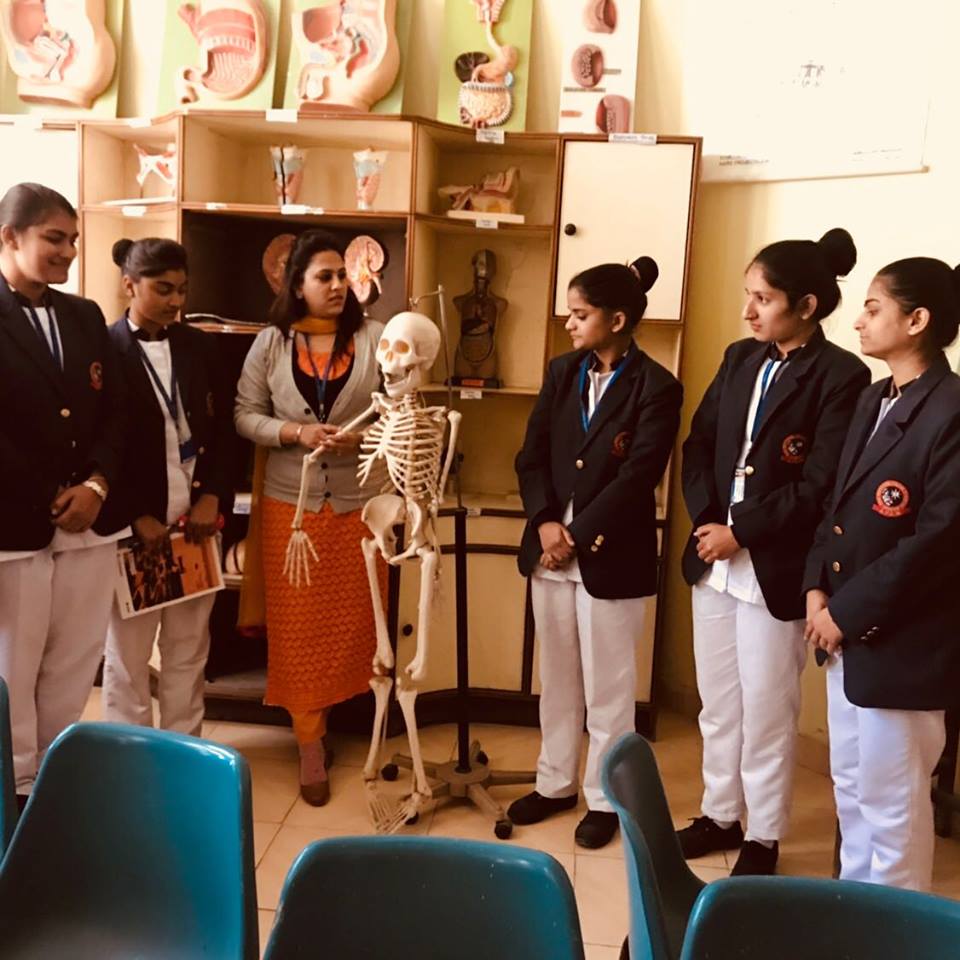
2. In the skills laboratory, you practise health assessment, vital signs, medication preparation, wound care, mobility, communication, documentation and infection control. Repetition exposes errors before they affect a patient.
3. Simulation sessions add pressure and decision-making. You may respond to deterioration, perform emergency response steps, communicate with a distressed person, document findings and maintain infection control using mannequins or simulated cases.
4. Clinical postings place you under supervision in medical-surgical wards, critical-care environments, maternity and newborn units, paediatric wards, psychiatric units and community clinics. Home or public-health visits apply family assessment, health education and prevention work outside the hospital.
The final clinical internship is a sustained period of supervised practice, not another classroom paper. You gradually connect assessment, medication safety, care planning, procedures, teamwork and documentation across real shifts. Its sequence, duration and required hours depend on the university and nursing regulator, so check the official programme document before enrolling.
How are B.Sc. Nursing subjects assessed, and what should you compare?
Passing written examinations alone does not demonstrate clinical competence. Expect assessment across written examinations, practical examinations, clinical evaluations and coursework: scientific knowledge and nursing theory in papers; procedures, specimens, calculations and structured skills check-offs in laboratories; and safety, communication, assessment, care planning, documentation, teamwork and professional conduct during placements.
| Assessment type | What it tests | Evidence to look for |
|---|---|---|
| Written examinations | Science, nursing theory, clinical reasoning and public health | Marks by paper, pass rules and internal assessment |
| Practical examinations | Procedures, specimens, calculations and skills | Skills-lab schedule and check-off criteria |
| Clinical evaluations | Safe patient care and professional behaviour | Placement evaluation forms and supervisor feedback |
| Coursework | Care plans and case presentations, seminars, assignments, research projects and viva voce examinations | Required submissions and grading weight |
Compare colleges by requesting these documents and details:
- The semester-wise subject list, including separate or integrated papers
- The laboratory and simulation schedule, with named skills
- Clinical-placement areas, such as medical-surgical, maternity, paediatric, psychiatric and community settings
- Internship sequence, supervision arrangements and required hours
- The assessment pattern, including theory, practical and clinical pass requirements
- Elective choices and their availability each year
- Whether Nursing Research and Statistics, a research project or evidence-based practice assignment is compulsory
Prospective students considering Amar Professional College of Nursing 08048059238 can use this checklist when asking how classroom subjects connect to hospital and community placements. Choose on the documented curriculum and supervised practice available, not the course title alone.
Related products
 | ₹60000 • The candidate should have passed 12 years of schooling from recognised school. View product → |
 | ₹60000 • The minimum age requirement shall be 17 years on or before 31st dec of the year of admission. View product → |
Frequently asked questions
Which subjects are taught in the first year of B.Sc. Nursing?
First-year subjects commonly include Anatomy, Physiology, Biochemistry, Nutrition, Psychology, Sociology, English, Nursing Foundation and introductory practical training.
What nursing and specialty subjects appear in the middle years?
Middle-year study usually covers Medical-Surgical Nursing, Pharmacology, Pathology, Genetics, Microbiology, Child Health Nursing, Mental Health Nursing and Obstetric and Gynaecological Nursing.
What do final-year subjects add to a B.Sc. Nursing degree?
Final-year subjects develop Community Health Nursing, Nursing Education, Nursing Administration, nursing research, leadership and readiness for supervised internship practice.
How do theory subjects become clinical and internship experience?
Students apply classroom knowledge through skills-lab demonstrations, supervised ward rotations, patient assessments, care plans, medication practice, documentation and internship duties.
How are B.Sc. Nursing subjects assessed?
Assessment can include written theory papers, practical examinations, viva voce, skills demonstrations, clinical records, assignments, presentations and ongoing clinical evaluations.